|
A calm bedroom does not have to look empty, cold or overly styled. The most inviting spaces usually balance softness, function and a sense of personality. That balance is exactly where Nusarah fits naturally: the brand brings together handcrafted design, refined materials and a strong connection to nature. By choosing fewer objects with more presence, you can turn an ordinary bedroom into a place that feels layered, restful and distinctly yours. Start with the atmosphere, not the furnitureBegin with the atmosphere you want to experience. Should the room feel airy and light, warm and cocooning, or calm with a subtle bohemian influence? Once that direction is clear, every later choice becomes easier. Think in terms of texture, movement and rhythm. Soft fabric around a bed changes hard lines, while natural tones reduce visual noise. The goal is not perfect coordination. It is a room in which each element supports the same emotional tone.
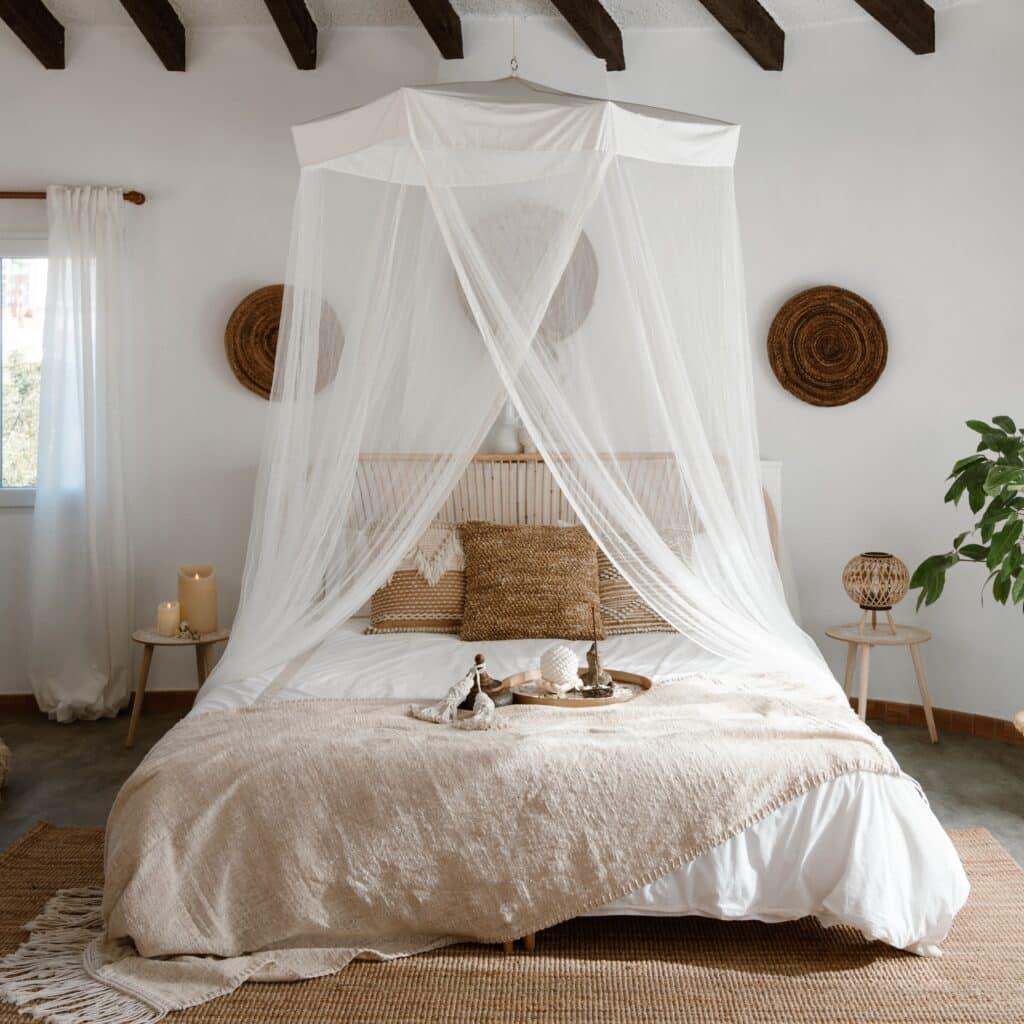
Use a canopy as an architectural layerA mosquito net is often seen as a purely practical product, yet it can also function as a striking architectural layer. It frames the bed, softens the ceiling line and creates a more intimate sleeping zone without closing the room off. In a large bedroom, this makes the bed feel grounded. In a smaller room, a light and well-proportioned net can add height and elegance. Round models create a relaxed, flowing silhouette and require only one suspension point. Rectangular models have a more structured presence and work especially well above larger beds or box springs. They can make the sleeping area feel almost like a room within a room. Material matters here. Cotton has a naturally soft appearance and adds warmth, while finely woven polyester tends to look lighter and more streamlined. The best choice depends on the desired atmosphere, the shape of the room and the amount of space around the mattress. Let materials do the decoratingA serene bedroom benefits from materials that are visually quiet but tactilely rich. This is why cotton, canvas, wood, linen and recycled fibres work so well together. They do not compete for attention, yet their surfaces prevent the room from feeling flat. When selecting textiles, look beyond colour. Consider how the material falls, catches daylight and feels against the skin. A heavier cotton border can give a canopy a tailored finish, while a handwoven accessory adds the subtle irregularity that makes an interior feel human. The following elements can help create a cohesive room:
This combination works because it engages more than the eye. It shapes how the room feels, moves and even smells. Make sustainability visible in small decisionsSustainable interior design is not limited to buying products with a green label. It also involves longevity, repairability, responsible production and the prevention of unnecessary waste. A product that remains beautiful and functional for years is often a better choice than one designed around a short-lived trend. Small-batch production can support this approach because it reduces overproduction and allows for closer quality control. Reusable cotton storage bags, recycled paper labels and plastic-free packaging may seem like minor details, but together they reflect a broader way of thinking. They show that presentation does not need to create disposable waste. The same applies to materials. Natural cotton can offer softness and biodegradability, while recycled fibres give existing waste streams a new purpose. Responsible living becomes most convincing when function, beauty and ethics are treated as one design challenge rather than three separate goals. Adapt the design to the roomNot every bedroom has straight walls or symmetrical proportions. Sloped roofs and limited suspension points can make standard solutions difficult. Instead of forcing a rigid setup into the room, work with its geometry. A flexible hanging system can position fabric around beams or beneath a slanted ceiling. In a compact space, keeping the sides slightly open preserves circulation. The most elegant result is the one that appears intentional, even when the room is unconventional. Consider movement around the bedBefore installing any canopy, check how you enter and leave the bed, where doors open and how far the fabric should fall from the mattress. Too little space can make the arrangement feel cramped. Too much distance may weaken the enveloping effect. It also helps to consider ventilation. A fine, carefully balanced weave should support airflow while still providing insect protection. This is especially important in warmer rooms, summer bedrooms and homes where windows remain open at night. Extend the same calm outdoorsThe feeling of shelter created around a bed can also work on a terrace, patio or balcony. An outdoor canopy turns an open seating area into a defined place for dining, reading or resting. It adds movement in the breeze and introduces a sense of privacy without building permanent walls. Outdoor use demands stronger construction. Reinforced polyester, durable canvas borders and secure suspension points are better suited to changing weather conditions than delicate indoor fabrics. Even then, thoughtful care matters. Regular airing, gentle cleaning and proper storage outside the season can extend the life of the material considerably. A calm home is ultimately built through repetition. The same natural colours, tactile materials and handcrafted details can move from bedroom to terrace, from cushions to throws, and from practical protection to decorative expression. Elegance feels effortless when every object has a purpose and every purpose is given a beautiful form. |